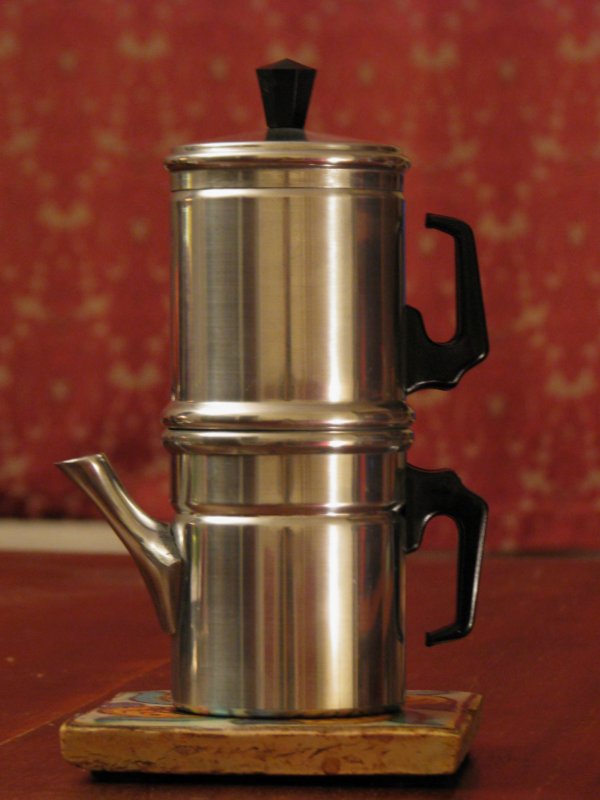
Anyone who’s been to Naples says it: coffee tastes different here. And it’s not vacation suggestion — it comes down to a combination of details rooted in Naples for generations. We drink it every day, and we’ll try to explain them one by one, without mythologizing, but also without downplaying what makes the Neapolitan cup special.
The darker roast
Neapolitan espresso starts from a dark roast, which gives that intense, full-bodied cup with notes of chocolate and licorice and a dense, hazelnut-colored crema. It’s the taste Neapolitans call “forte” (strong) — not sharp, but full and lingering. The city’s historic blends (Kimbo, Borbone, Passalacqua) are built on exactly this profile, often with a good share of robusta that adds body and crema. → Guide to the brands.
The water
Many people in Naples swear the secret is the water. Whether that’s 100% true or not, water mineral content really does affect extraction and taste: it’s chemistry, not folklore. It’s also one of the reasons the same coffee, at home, often doesn’t taste the way it does at the bar downstairs.
The grind and the barista’s hand
Finely ground beans, a generous dose, short extraction (“ristretto”), a scalding cup. And then there’s the hand: in Naples, being a barista is a serious craft, almost an artisan trade. Grinder settings shift with the weather and the day’s humidity — a detail that sounds like legend but is actually fine-tuned control over an extraction process. In many historic bars you’ll still see the hand-operated lever machine.
The ritual: how it’s drunk
Taste is half the story; the other half is the ritual, and that’s where Neapolitan espresso becomes culture:
- It’s drunk on the fly, standing at the counter, often in a few seconds.
- Before the coffee, the barista serves a glass of water, to be drunk first to clean the palate and prepare it.
- The cup is scalding hot and thick, so the coffee doesn’t cool while you drink it.
- It often arrives already sweetened: if you want it bitter, ask (and don’t be surprised by a look or two).
- A Neapolitan can drink three or more a day, at any hour.
How to order it, in dialect
There’s a distinctly Neapolitan way to ask for it strong and hot: the three “c’s” — “comm, cazz, coce” — meaning scalding hot and made just right. It’s the kind of detail no tourist guide really explains, but that’s everyday life in Naples. → The page on how to order coffee in Naples.
Crema di caffè
In summer, or just as a treat, there’s crema di caffè: a sweet, cold foam made from espresso, whipped with sugar. A small Neapolitan classic you’ll find in plenty of bars. → The dedicated page.
Neapolitan vs. “regular”
Compared to an espresso from northern Italy or served internationally, the Neapolitan version tends to be darker, fuller-bodied, shorter, and sweetened by default. It’s not “better” outright: it’s a different idea of what a cup of espresso should be. → Neapolitan espresso vs. regular espresso.
More pages on the method
Making coffee like they do in Naples, at home · Neapolitan espresso vs. regular espresso · the ritual of coffee · how to order it in dialect · crema di caffè · why Naples water makes a difference · the Neapolitan roast profile.
Frequently asked questions
Why is Neapolitan espresso stronger? A darker roast and a short extraction give a more intense, full-bodied cup.
Why do they serve it with water? The water is drunk first, to clean the palate and taste the coffee better.
Why does it arrive sweetened? It’s the local habit. You can always ask for it bitter.
Is it true that Naples water makes a difference? Water mineral content does affect extraction and taste, so there’s some truth to it, even if it’s not the only factor.