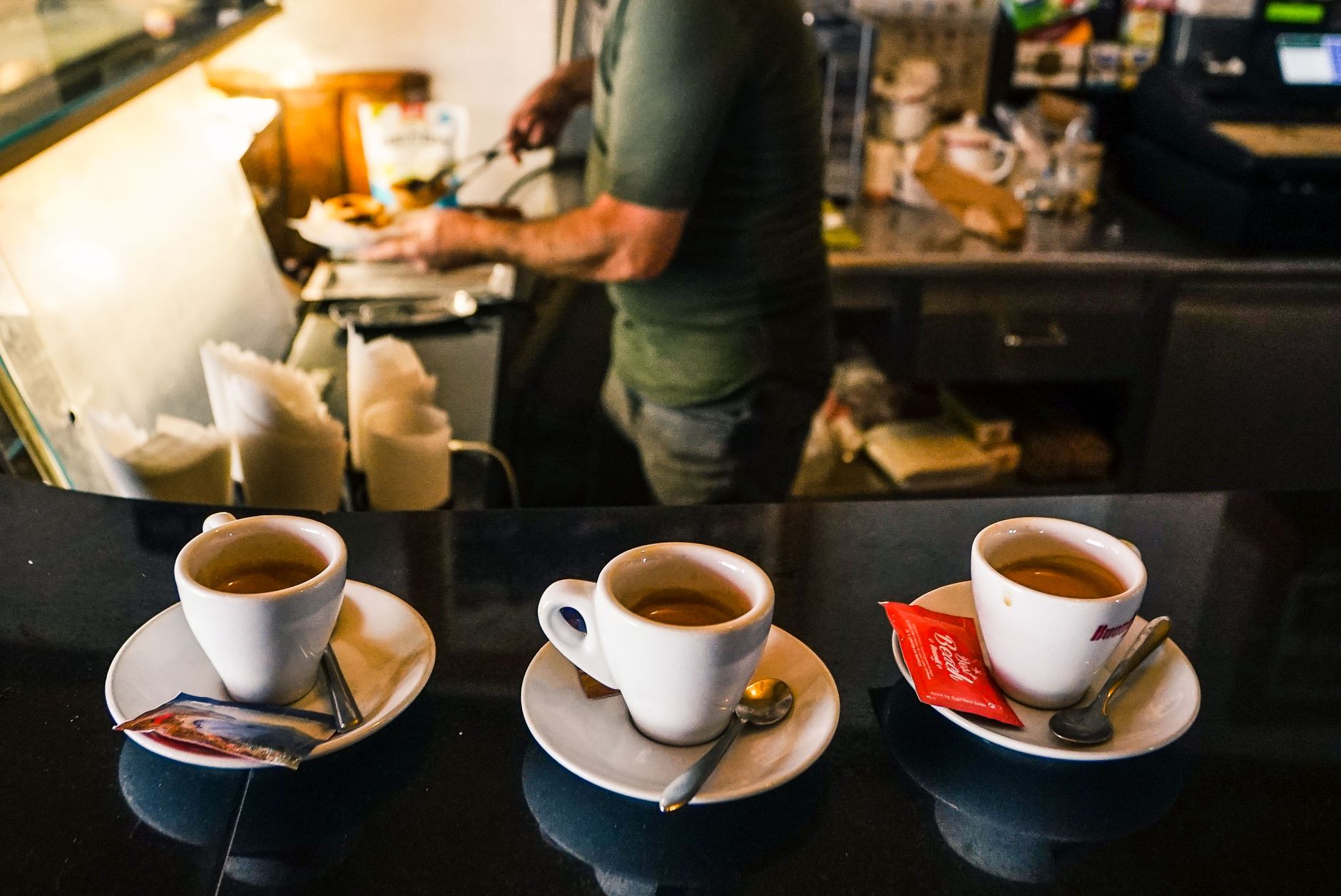
There’s a gesture in Naples that says more than a thousand speeches about the city: caffè sospeso, suspended coffee. You pay for two coffees, drink one, and the other stays “suspended” — paid for in advance for whoever comes next and can’t afford it. Nobody asks for a name, nobody thanks anyone in public. It’s quiet generosity, and one of the most authentic ways to understand what coffee really means in Naples.
How it works
Dead simple, and that simplicity is exactly its strength. You walk into the bar, order a coffee, and pay for two. The barista sets the “suspended” one aside — sometimes marking it on a little chalkboard. Later, someone else walks in and asks: “Is there a suspended coffee?” If there is, they get it, no questions asked and no looks exchanged.
It’s not charity, it’s sharing
This is the part that’s often misunderstood, especially outside Naples. The sospeso doesn’t come from top-down charity: it comes from a way of sharing a pleasure while preserving the dignity of whoever receives it. Whoever asks for it doesn’t have to justify themselves; whoever leaves it doesn’t look for gratitude. It’s a silent pact between strangers, an invisible but very real thread in the city’s social fabric. As we like to say, studying people’s habits for a living: it’s a ritual that turns an economic gesture into an act of community.
Where it comes from
Its roots are in the working-class cafés of early-20th-century Naples, frequented by the working class. But it was during the Second World War that the practice took hold: in a city marked by hunger and bombing, offering a stranger a coffee meant giving back a little humanity. According to the Gambrinus, the custom first spread widely as far back as the time of Italian Unification.
In 2010, for its 150th anniversary, the Gran Caffè Gambrinus officially relaunched the tradition, and it’s thanks in part to historic places like this one that the sospeso is alive again today. Since then, there’s been a Suspended Coffee Network, with its own dedicated day on December 10.
De Crescenzo’s words
Neapolitan writer Luciano De Crescenzo told the story of the sospeso to the world with his book of the same name, and with a line that’s become famous: when a Neapolitan is happy, instead of paying for a coffee just for himself, he pays for one for someone else too — and that’s like offering a coffee to the rest of the world. It’s one of the most beautiful definitions of what this gesture means.
Where to find it today
The sospeso is still practiced, especially in neighborhood bars and historic places like the Gambrinus. Many bars display a small chalkboard with the number of coffees already paid for; often, though, all it takes is asking at the counter. Plenty of tourists take part enthusiastically too: for many, it’s an authentic way to connect with the spirit of the city. → The historic bars of Naples.
Beyond coffee, beyond Naples
The gesture has inspired others. During the pandemic, “solidarity baskets” appeared, lowered from windows in the Quartieri Spagnoli; bookshops picked up the “suspended book”; and similar initiatives spread to other countries — from the café suspendu in Belgium to acts of solidarity in Argentina. But the heart of it stays the same: paying in advance for something for someone you don’t know.
Frequently asked questions
What does “caffè sospeso” mean? A coffee paid for in advance and left available to someone who can’t afford one.
Where did it come from? In the working-class cafés of Naples, with strong spread during the Second World War.
Does it still exist? Yes, especially in neighborhood bars and historic places like the Gran Caffè Gambrinus; there’s even a dedicated day, December 10.
Is it charity? Not in the classic sense: it’s an anonymous act of sharing that protects the dignity of whoever receives it.