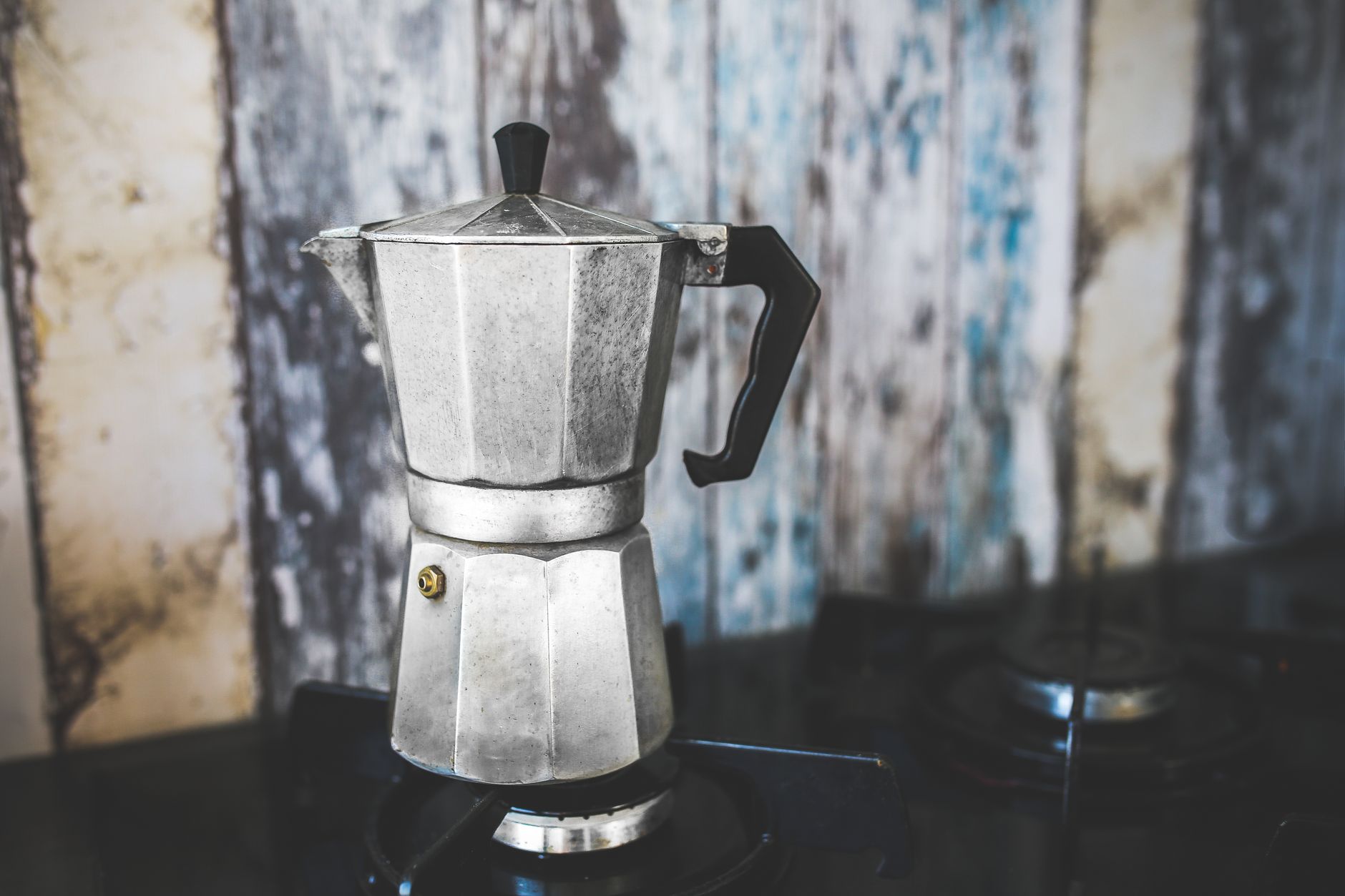
If the cuccumella is tradition, the moka is the present: since the 1930s it’s been the coffee pot in almost every Italian kitchen, Naples included. Making good coffee with it seems obvious, but the details make the difference. Here’s our guide.
How it works: steam pressure
The moka uses pressure: water in the boiler, heated, produces steam that pushes the water upward through the coffee and up into the collector. It’s the opposite of the cuccumella, which works by gravity. That’s why the moka gives a more intense, fuller-bodied cup, with a bit more bitterness. → Cuccumella vs. moka.
The rules for good coffee
- Water up to the valve, not beyond.
- Coffee in the filter, filled and leveled, without tamping.
- Medium-low flame, lid open so you can keep an eye on it.
- Take it off the heat as soon as you hear the gurgle and the coffee turns pale.
- Stir it in the pot before pouring.
For exact numbers: grind and dosing for the moka.
The most common mistakes
Bitter, metallic, weak: it’s almost always the wrong grind, too high a flame, or a dirty pot. → Fixing moka problems.
Maintenance
Aluminum should only be rinsed, never washed with detergent or in the dishwasher: it “seasons” with use. → Cleaning and maintaining the moka.
What coffee to use
A medium-dark roast blend, ground “for moka.” In Naples, the usual names: Kimbo, Borbone, Passalacqua. → The best coffee for the moka.
More pages
Grind and dosing · fixing problems · the best coffee · cleaning and maintenance · moka vs. cuccumella.
Ready to buy one?
The best moka pots · best Neapolitan coffee makers overall.
Frequently asked questions
How does the moka work? Steam pressure pushes hot water up through the coffee.
Why is my coffee bitter? Usually a grind that’s too fine, too high a flame, or a pot that isn’t clean.
Should I wash it with detergent? Not if it’s aluminum: hot water only.