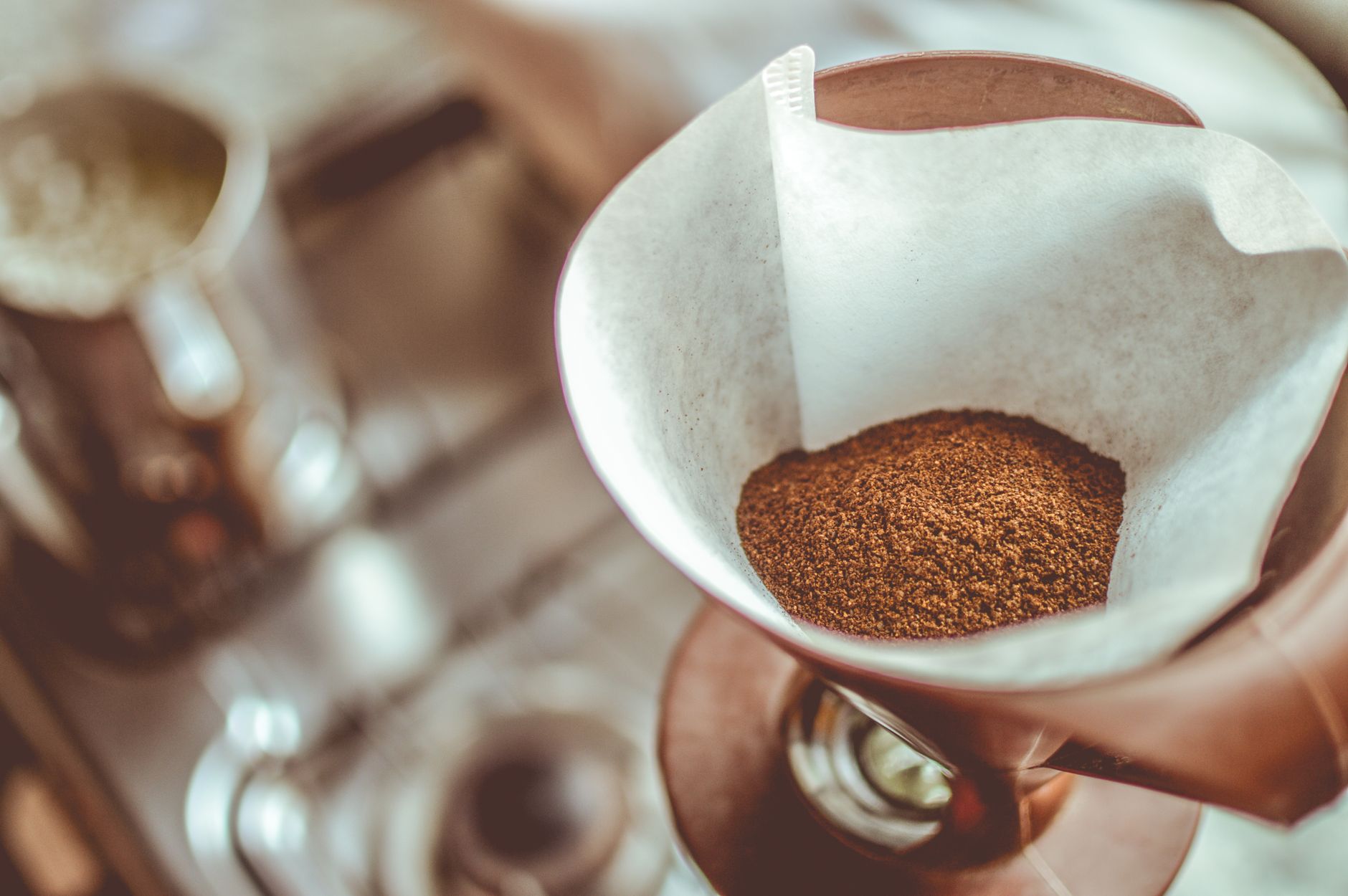
Two variables make the moka: the grind and the doses. Getting them wrong is the number one reason for bitter or watery coffee. Here are the right reference points.
The grind: medium
The moka wants a medium grind, a middle ground:
- Too fine (espresso-style) → water struggles, pressure builds too much, coffee comes out bitter and risks “exploding.”
- Too coarse (drip-style) → water passes through quickly, coffee comes out weak and watery.
- Right: slightly finer than granulated sugar. If you buy pre-ground coffee, look for “for moka.”
The doses
A simple, tried-and-tested rule:
- Water: fill the boiler up to the safety valve, never above.
- Coffee: fill the funnel filter to the brim, leveled, without tamping.
With these two, the moka is “self-dosing”: the geometry does the work. For a lighter coffee, don’t reduce the water below the valve — use a smaller moka instead.
Never tamp it (ever)
This is the mistake to unlearn: in a moka, you never tamp the coffee. Tamping increases resistance, pressure rises too much, and the cup comes out bitter. Just fill it and level it off. Tamping is a very light, almost imperceptible gesture on an actual espresso machine — an experienced barista taps it down two or three times, lightly twisting the tamper by hand, before locking the portafilter under the group head, then pulling the lever a couple of times with no coffee to let the boiling water run through before engaging the arm. None of that applies to the moka: here, it’s fill and level, nothing more.
Grinding fresh makes the biggest difference on a medium grind like this one: → the best coffee grinders for moka and cuccumella.
Frequently asked questions
What grind should I use for a moka? Medium: finer than drip, coarser than espresso.
How much water goes in a moka? Up to the safety valve, never above.
Should I tamp the coffee? No: just fill it and level it off.