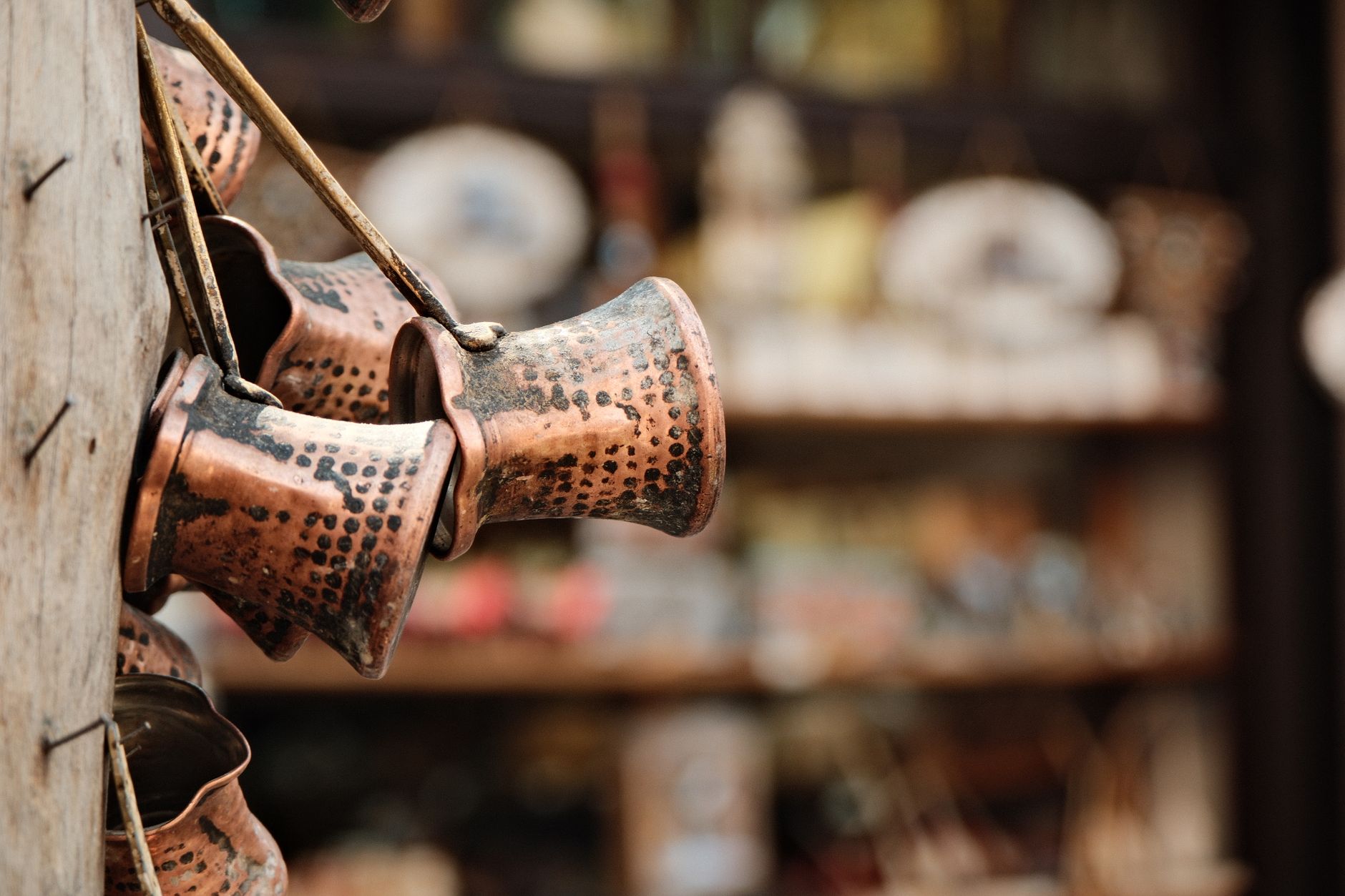
The most Neapolitan coffee pot there is wasn’t actually born in Naples. It’s one of those paradoxes that make coffee history so fascinating: a French object that an Italian city made so completely its own that it gave it the city’s name.
The invention: Paris, 1819
The cuccumella was born in Paris in 1819, credited to a craftsman named Morize. It was an era when France was experimenting with the first “drip” coffee pots as an alternative to boiling grounds directly, following the cafetière à la De Belloy, the first percolator. The principle was revolutionary for its time: water filters by gravity through the coffee, instead of boiling in it. It is, in effect, one of the first drip coffee makers in history.
Arriving in Naples, and copper
The object soon arrived in Italy and found in Naples a city that turned it into a household ritual. The earliest cuccumelle were made of copper; from the late 1800s, aluminum spread, cheaper and lighter, carrying it into every working-class kitchen.
The mystery of the name
Two names, two stories. In Neapolitan, cuccumella comes from cuccuma, the copper or earthenware vessel used for heating liquids. In English, instead, the coffee pot took the name of the city: Neapolitan flip pot, napoletana. Why an object of French origin became known around the world as “the Neapolitan” remains one of the loveliest curiosities in coffee history — proof of just how completely Naples made it its own.
The decline and the return
For a century, the cuccumella reigned in Neapolitan homes. Then, in 1933, the Bialetti moka arrived: faster, more convenient, more “modern.” The cuccumella, slow and ceremonial, was gradually set aside. Today, though, it’s making a comeback — in specialty bars, in the kitchens of people seeking authenticity, among enthusiasts around the world — for the very reason it was once set aside: its slowness, its gesture.
A piece of Neapolitan culture
The cuccumella and the coffee ritual have marked Naples’ culture all the way to the theater: coffee made on the balcony is one of the most celebrated images in Eduardo De Filippo’s plays. I’ve always loved Eduardo’s comedies — one of my favorites is Questi fantasmi (“These Ghosts”). Today I have the privilege of professionally assisting the heirs of Luciano De Crescenzo, the man behind caffè sospeso.
Frequently asked questions
Where was the cuccumella invented? In Paris, in 1819.
Why is it called “napoletana”? Because Naples adopted it as a household tradition to the point of giving it the city’s name worldwide.
Why was it replaced by the moka? The Bialetti moka (1933) was faster and more convenient for modern life.